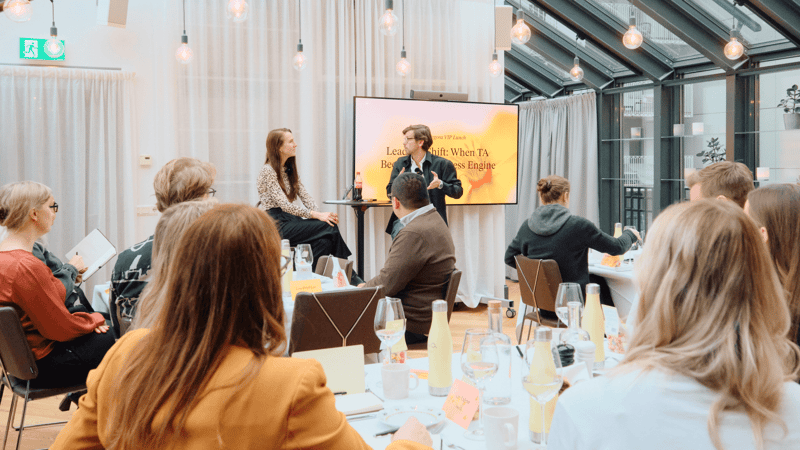
Talent acquisition is business-critical. Everyone says it. Few act like it. That disconnect was front and center at Alva Labs’ recent lunch event at Miss Clara in Stockholm, where a small group of people leaders came together for sharp insights, honest discussions — and a chance to rethink what great hiring really looks like.
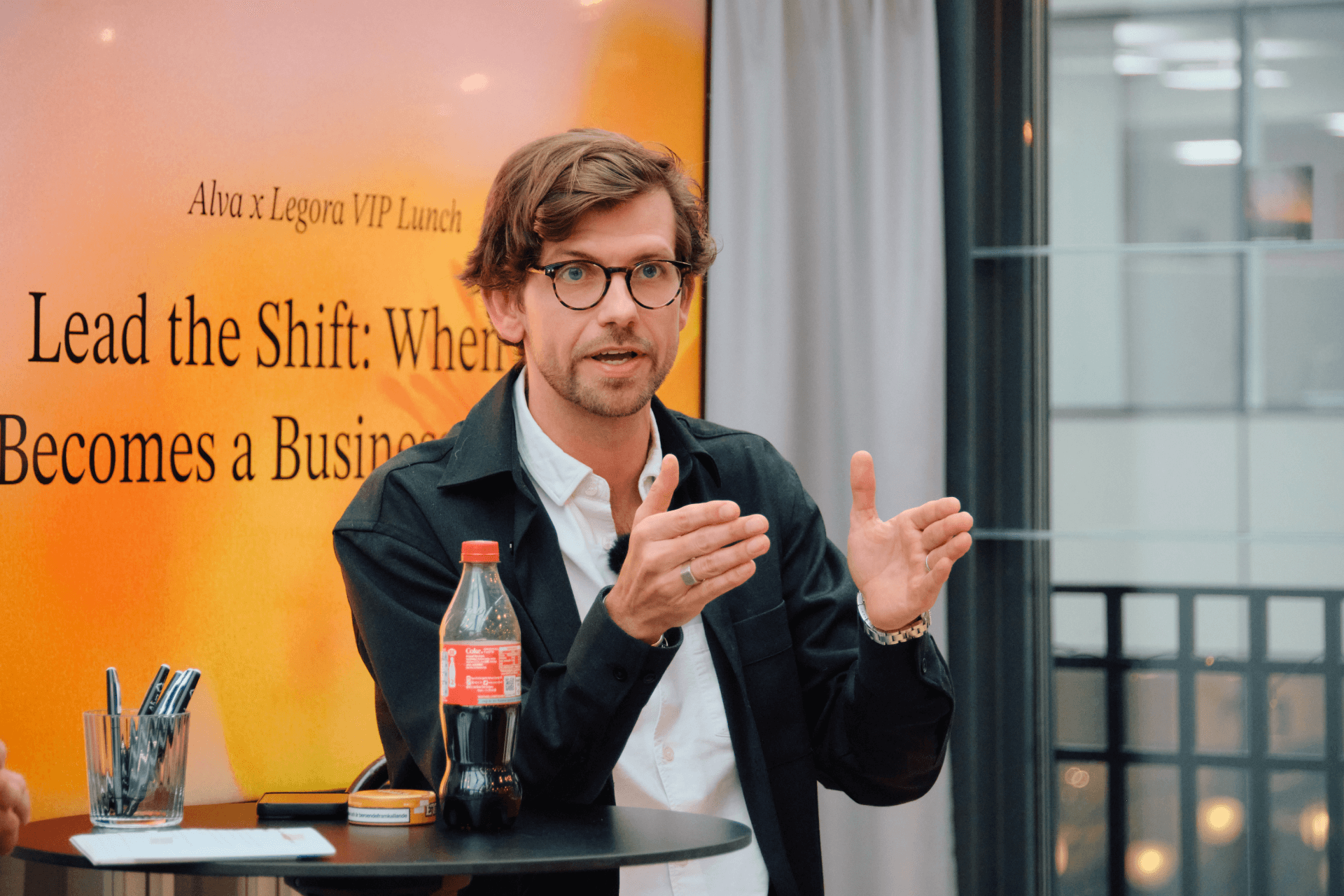
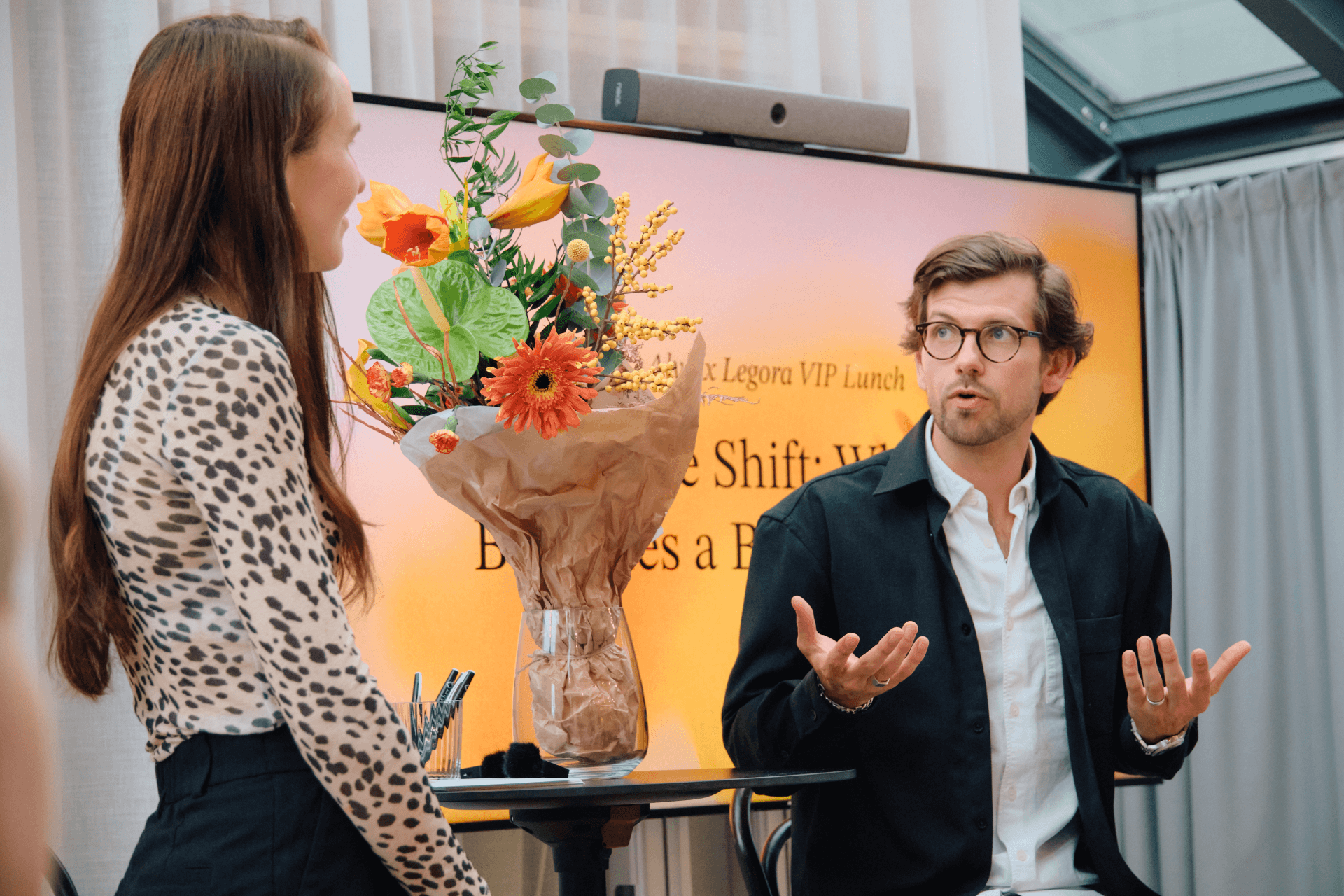
On stage, psychologist and People Science Lead Kajsa Asplund sat down with Mathias Cedervall Timell, Head of People Enablement at Legora, for a candid fireside chat on what it really takes to turn hiring into a business driver.

From left to right: Kajsa Asplund, Alva Labs, Mathias Cedervall Timell, Legora
Mathias brings a rare blend of strategy, culture, and execution. Before joining Legora, he led global recruitment strategies at companies like Anyfin, Instabox, Mpya Digital, Gelato, and Klarna — developing scalable, modern ways of working that unlock the potential of teams and leaders.
Kajsa combines cutting-edge research with hands-on experience. As the author of Talang för människor and a PhD in Talent Management, she helps companies rethink how they define, assess, and develop talent — turning hiring into a system, not a gamble.
Want the full story?
Watch the complete fireside chat to hear Kajsa and Mathias break down what it really takes to build a hiring system that drives results — from mindset shifts to practical frameworks.

What the conversation came down to:
TA has to stop underestimating itself
Hiring is still seen as operational support — because TA often positions itself that way. That’s where the problem starts.
“If you don’t own outcomes and you only choose to own a small part of the process at the very top of the funnel…
you’re placing yourself in a situation saying, ‘oh I wish I was part of the strategy discussion,’ but you’re not contributing to that.”
- Mathias Cedervall Timell, Head of People Enablement, Legora
If you’re not claiming ownership beyond sourcing — all the way to business impact — you’re limiting your influence. TA teams that want a strategic seat need to show how hiring drives outcomes. Without that, you're just running tasks — not shaping direction.

If you want to be strategic, own the metrics
Influence comes from accountability. That was clear when Mathias made the comparison to other business-critical roles:
“If a CFO stepped into a management meeting and only wanted to talk about finance, but as soon as marketing came up they had nothing to say… they would not be in that room.”
- Mathias Cedervall Timell, Head of People Enablement, Legora
To lead, TA needs to speak in terms of business value — not just hiring velocity or time to fill.
Kajsa put it simply:
“It’s one thing to talk about being data-driven. It’s another to actually measure the right things and use those insights to make better decisions. That’s where most companies fall short.”
– Kajsa Asplund, Lead People Science, Alva Labs
Systems win. Gut feel doesn’t.
Despite decades of research on what predicts performance, many hiring processes still rely on intuition.

“We’ve had 50 years’ worth of research telling me and you that the way you’re going about it is the wrong way...
If you’re not using it, like that’s the recipe. That’s a choice.”- Mathias Cedervall Timell, Head of People Enablement, Legora
Mathias shared his team’s six-step model — Define, Assess, Align, Decide, Improve, Reiterate — which ensures hiring is grounded in evidence and constantly evolving.
.png?width=1920&height=1280&name=Event_Half%20blurred%20background%20image_1920x1280_AlvaxLegora_5%20(1).png)
Kajsa added:
“Systematic hiring isn’t about removing the human element – it’s about giving people the tools to make fairer, more confident decisions.”
– Kajsa Asplund, Lead People Science, Alva Labs
AI won’t replace people — but it will expose bad process
AI is changing what’s possible in hiring — especially when it comes to turning qualitative data into insights. But without the right inputs, it’s just noise.
“You’re sitting on a goldmine. Start digging:
If you’re not in your ATS and your HRIS making sure that you gather as much data as possible… you’re falling behind.”- Mathias Cedervall Timell, Head of People Enablement, Legora
The message was clear: AI can help amplify good hiring practices, but it can’t fix broken ones. You need structure, criteria, and data worth analysing.
The takeaway
It’s not about adding more tools. It’s about building a system that connects the dots — from role definition to real-world results.
A system that uses evidence over instinct. That supports better decisions, stronger teams, and long-term success.
Because the companies that get this right won’t just hire faster — they’ll hire smarter. And they’ll be the ones shaping what’s next.
Ready to see it in action?
If you’re rethinking how your team hires — and want to see how Alva can help you build stronger teams and drive more strategic impact — we’d love to show you how it works.

.webp?width=400&height=324&name=hero_Sumit-Bajracharya%20(2).webp)
.webp?width=400&height=324&name=hero_Anna-Brodin%20(1).webp)